Article: What Is Maat?
What Is Maat?
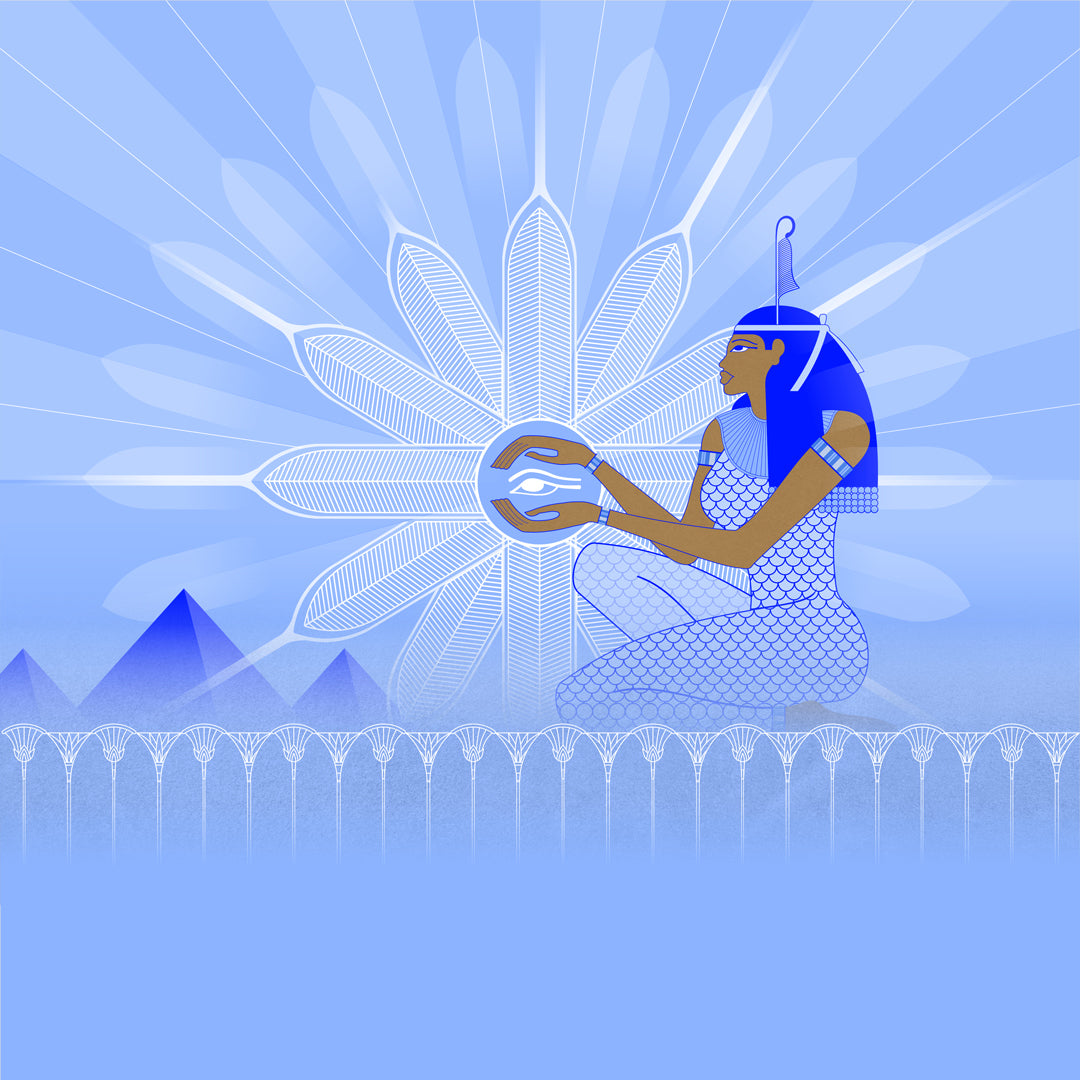
Maat is an ancient African scientific concept based on the natural body of interdependent law that keeps all things in the universe in balance. It is the universal law that is seen, without fail, cutting across all scales of life at once; i.e., on a grand cosmic scale, in the context of an individual human life, as well as in the world as seen through the microscope. Planets orbit perfectly and the sun rises on time because of a universal balance wherein there is a *right place and time for all things. Likewise, the kindness and morality that characterizes the bright side of human life is the result of people interacting in a sustainable way - a way wherein all parties benefit, in perpetuity. On a micro scale, we acknowledge the fundamental order that physical matter’s building blocks adhere to “religiously”. We could hardly imagine life if electrons decided to go off-script, if molecules in organic compounds decided they no longer got along and wanted to divorce. Order is evidently The Law. Of Life. as we know it...
Maat In History
…Acknowledgement of this is recorded in history as far back as the Unas papyrus c.2387 BC in Kamit (ancient Nile Valley). Long before science and spirituality were separated, Maat was listed among the principle divinities that comprised the Kamitic spiritual system. The ancients viewed “God” as one supreme being that extended itself into the world which operates operates according to a body of law. God’s presence in the world can be delineated into qualitative categories just like light breaks into phases on its spectrum, just like matter exists in different phases or states, just like sound exists in different octaves and matter breaks up into periodically arranged elements. All things in the world are essentially one, but have observable components. Likewise, “the divine” is one, and has observable components. When people say “God in me”, or “I’m divine” - that divine life essence that is inside of us exists in different components. We all (mostly) have verbal thought and can think words and speak. What should we call this function of the human mind-body? We all (mostly) have ..visual cognition or imagination. If I say, “stop reading, close your eyes, and imagine a yellow flower”, 99% or so of us can do this. If you’re walking home and come across 4 young children bullying another, something wells up in us to interject and restore harmony and “correctness” to the situation. What shall we call the verbal or visual thought faculties or the urge to maintain justice that is within us? In ancient times, Africans gave names to these basic urges. Those names traveled down the vista of time to become the “neteru”, “orishas”, “gods”, “deities”, “divinities”, “archangels”, etc. that survive in modern language albeit without a full comprehension of the original use of such terms.
That ability to think words and speak was called, by the Kamau (ancient Egyptians), Sebek. It was called by the Yorubas, Elegba. It was called by the Akans, Anansi. The urge for justice in the bullying scenario was called Herukhuti aka Ogun. The “correctness” that would be restored after interjecting was called Maat in Kamit. It is natural. All scientific observation reports a nascent leaning toward balance, interdependence and sustainability in all organisms and ecosystems. We don’t find any living or non-living thing that thrives off of “chaos” or lack of order.
Maat In Spiritual Culture
This balance principle, that manifests in us as an urge for order and lawful life, is one of many parts of our spirit. When cultivated, it leads to wealth, success, and a healthy, philanthropic type of fame. The benefit of Kamit’s 2,500+ years of unbroken culture is cumulative wisdom - 25+ centuries of practice promises to yield advanced insight. The Kamau were able to learn the sounds, smells, colors, foods, geographic directions, and electromagnetic properties associated with Maat. From this came a holistic culture of deliberate cultivation of the principle in social life. The modern word, “luck” comes from the Hindu version of Maat, called Lukshmi. By chanting the sounds associated with Maat, wearing its scents, etc. priests were able to significantly increase the positive personality traits associated with the principle. “Maat” is just a label. The virtue behind the word is real. The ancients built the breath-taking marvels that we celebrate posthumously by gathering around practices like this that worked to enhance performance.
Kamitic Legacy courses are designed to provide detailed instruction on the recovered spiritual growth techniques adapted to modern life. The Maat Book & Course by Ra Un Nefer Amen are a masterfully crafted introduction to using meditation to achieve happiness, success, wealth and well-being!